Winter-Proof Your Home: What Snow Buildup Can Teach You About Roof Design, Safety, and Long-Term Durability
When the snow begins to stack up and temperatures dip below freezing, the strengths and vulnerabilities of a home’s exterior are quickly revealed. A metal roof is often praised for its resilience, yet winter weather has a way of exposing tiny fastener leaks, ice buildup along seams, and drifts that settle heavily against ridges. By translating these seasonal observations into comprehensive repair solutions for metal roofs, homeowners can significantly boost long-term durability, improve safety, and prevent repeat issues before the next major storm rolls through.
Assessing the Damage and Tracing Leaks
A smart restoration plan begins with a careful evaluation of how the structure performed during a heavy freeze-thaw cycle. Often, the best place to start isn’t on the roof itself, but in the attic. On a bright afternoon, turning off the lights can help spot pinholes of sunshine or damp trails in the insulation. Water stains near vents, chimneys, or skylights often point toward detailing problems rather than a catastrophic failure of the metal panels.
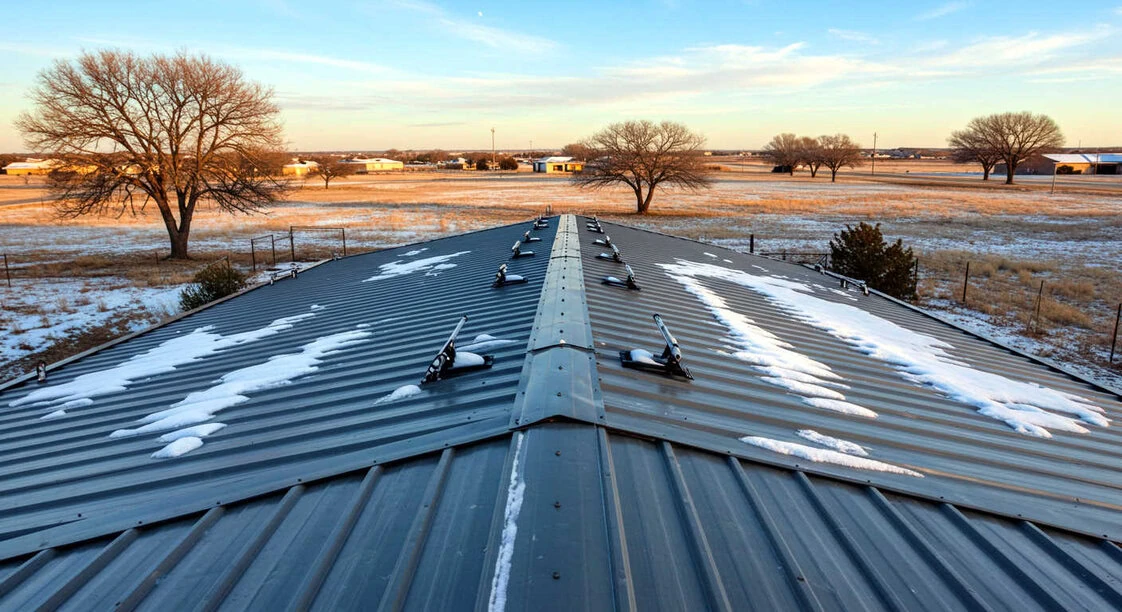
Outside, safety is the primary concern. Using a roof-safe ladder and proper fall protection, you should check for loose or backed-out fasteners and distorted panels where snow loads were highest. In colder climates, ice dam patterns tell a vital story; water backed up behind snow can sneak into laps or under flashing. While a garden hose test works in summer, tracing melt lines on a frosty morning is the best way to understand how wind and snowmelt travel during the winter months.
Fastener, Seam, and Penetration Repairs
Most leaks in metal systems can be traced back to micro-movements. Because metal panels expand and contract with temperature swings, fasteners can loosen over time. Effective metal roof repair starts with re-tightening or upgrading these components. If screws have worn threads or have “wallowed out” the original holes, they should be replaced with larger-diameter fasteners equipped with fresh neoprene washers to ensure a watertight seal.
Seams and laps also require a close look. For exposed-fastener systems, applying butyl tape in combination with high-quality sealant at the side laps can prevent moisture intrusion. Standing seam roofs rely on the integrity of the clips and locks; if a seam has opened due to heavy snow weight, a professional may need to re-seam the area or use specialized rivets to close the gap.
Addressing Rust and Protective Coatings
Rust typically starts small, appearing where the protective coating was scuffed during installation or damaged by sliding ice. If caught early, these spots can be wire-brushed to a bright metal finish, cleaned with a solvent, and treated with a rust-inhibitive primer. To prevent galvanic corrosion—which occurs when dissimilar metals touch—it is essential to use nylon washers or butyl separators to break the reaction cycle.
In harsher environments, a more robust strategy might include silicone or elastomeric roof coatings. These create a monolithic membrane over the entire surface, sealing minor gaps and improving solar reflectivity. Proper preparation is the key to success here: fastener heads must be sealed and seams reinforced with mesh before the coating is applied. This creates an extra layer of “winter insurance” against meltwater without the massive expense of a full replacement.
Professional Upgrades and Long-Term Maintenance
Sometimes, the most economical fix is a targeted panel replacement. If hail strikes or chronic leaks compromise a specific area, replacing the panel is more effective than repeated patching. During this process, upgrading the flashing is a “quiet hero” of durability. Wider metal flashings and continuous cleats in high-wear zones, such as valleys and eaves, can prevent ice dams from creeping under the panels. According to the Metal Construction Association, proper ventilation and underlayment are also critical factors in controlling the moisture trap that leads to internal rot.
Conclusion
Snow buildup is a tough but honest teacher that reveals exactly where roofing details come up short. By pairing those lessons with comprehensive repair solutions for metal roofs, such as tightening fasteners, renewing flashings, and treating rust, homeowners build a structure that is quieter in storms and more resilient during the spring thaw. Winter weather isn’t going anywhere, but with a proactive maintenance and repair strategy, your roof doesn’t have to either.