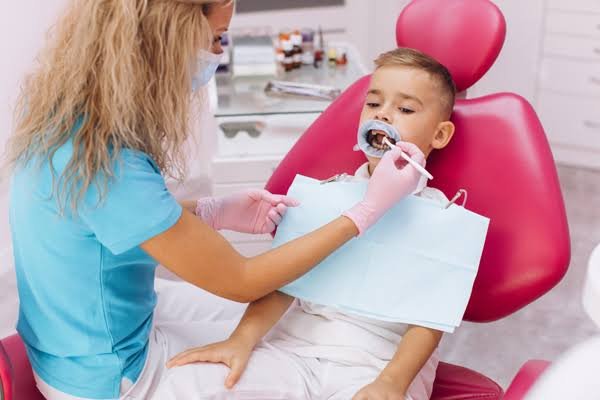
How Pediatric Dentists Help Children With Repeated Lip Or Cheek Biting
You noticed the sore spot first. Maybe it looked like a white patch inside your child’s cheek, or a swollen area on the lip that kept coming back. Then came the pattern. They bite the same place when they are tired, distracted, anxious, or growing into a new bite. It can feel small at first, until it keeps happening and never quite gets the chance to heal. If this sounds familiar, a children’s dentist in Cary, NC can help identify the cause and recommend the right treatment.
Repeated lip or cheek biting in children is common, but that does not make it harmless. When the tissue gets injured again and again, it can turn into a painful cycle of swelling, re-biting, irritation, and fear around eating or brushing. A pediatric dentist looks at the whole picture, including tooth position, bite changes, habits, stress, and healing, then builds a plan that protects the tissue and helps your child stop the pattern. How pediatric dentists help children with repeated lip or cheek biting often comes down to two things. They find the reason it keeps happening, and they make it easier for your child’s mouth to heal.
Repeated cheek and lip biting often starts with more than one cause
You may be wondering why your child keeps doing this when they know it hurts. The answer is often that they are not fully aware of it in the moment. Some children bite accidentally because their teeth do not meet evenly, or because adult teeth are coming in and changing the way the cheeks sit between the teeth. Others do it as an oral habit, especially during stress, boredom, or fatigue.
That is why a quick glance at the sore spot is rarely enough. A pediatric dentist checks whether the injury is caused by sharp tooth edges, crowding, a deep bite, braces or appliances, or a self-soothing habit that has become automatic. Habit-based oral injuries can be surprisingly stubborn in young children, and behavior support often matters just as much as the exam. The University of Connecticut recently highlighted how children can develop oral habits early and need age-appropriate help to break them, not just reminders to stop. Their overview on breaking oral habits in young kids explains why repeated behaviors often need structured support.
The hard part for parents is that these injuries can look worse before they look better. Bitten tissue swells. Swollen tissue gets caught again. Then your child starts avoiding crunchy foods, brushing near the sore area, or talking about pain at bedtime. If the wound keeps reopening, healing slows down and the tissue may become thickened or ragged.
Pediatric dentists treat the injury and the reason behind it
A children’s dentist for cheek biting does more than confirm that the area is irritated. The visit usually starts with a close look at the lesion, the bite, and any trigger patterns you have noticed at home. If the sore has a typical appearance and lines up with the teeth, the cause may be straightforward. If it does not, the dentist may watch it closely or recommend further evaluation to rule out other conditions.
Treatment depends on what is driving the problem. If a tooth edge is catching the lip or cheek, smoothing or adjusting that area may help. If the bite is contributing, the dentist may monitor growth, recommend orthodontic evaluation, or use a protective approach while the mouth changes. If stress or repetition is the main factor, the plan may include habit awareness, substitution strategies, rewards, and parent coaching.
Some children also benefit from a protective appliance when the injury is frequent or severe. A published review in the American Academy of Pediatric Dentistry discusses oral self-injury and the range of management options, including protective devices and behavior-based care. You can read more in this AAPD review on oral self-injurious habits in children.
Pediatric dental care for lip biting is also about comfort. If your child is in pain, it is hard for them to stop thinking about the sore area, and that attention can keep the habit going. Dentists can guide you on gentle home care, foods that are less likely to sting, and when a sore needs follow-up because it is not healing as expected.
Home observation and professional care are not the same thing
| Approach | What It Can Help With | Limits |
| Watching at home for a few days | Useful for a single accidental bite that is already improving | Does not identify bite problems, sharp teeth, or habit triggers |
| Reminding your child to stop | Can help older children who are fully aware of the habit | Often fails when biting happens during stress, sleepiness, or distraction |
| Soft foods and gentle rinsing | Reduces pain and gives tissue a better chance to heal | Does not prevent re-injury if the cause is still present |
| Pediatric dentist evaluation | Finds the cause, checks healing, and creates a treatment plan | Needs follow-through at home for habit-based cases |
| Protective appliance or bite adjustment | Helps when anatomy or repeated trauma is the main issue | Not every child needs this, and fit matters |
The difference is clarity. At home, you can soothe the area. A pediatric dentist can tell you why it keeps happening and what needs to change.
Small, immediate steps can reduce more damage
Track the pattern. Write down when the biting happens for three to five days. Include time of day, foods, mood, and whether your child was tired or upset. This gives the dentist clues that are easy to miss during the appointment.
Protect the tissue while it heals. Offer softer foods, avoid salty or acidic snacks if they sting, and encourage gentle brushing. If your child chews the same spot when anxious, redirect their mouth and hands with a safer routine such as sipping water, holding a comfort object, or doing a calming activity.
Book a pediatric dentist visit if the sore keeps coming back. If the area is recurring, swollen, bleeding, or not healing within about two weeks, it needs a closer look. This matters even more if your child says their teeth keep catching the same place.
See also: How to Maintain a Healthy and Beautiful Lawn Year Round
Early help can stop a painful cycle
You are not overreacting by paying attention to this. Repeated lip or cheek biting can look minor from the outside, yet it can turn into a daily source of pain for a child who is trying to eat, sleep, and get through school with a sore mouth. A pediatric dentist can sort out whether this is a bite issue, a habit issue, or both, then help your child heal and break the cycle.
If your child keeps biting the same spot inside the mouth, schedule an evaluation with a pediatric dentist. Early care is often the simplest way to prevent more pain and help that tissue finally heal.